PRINTED WORD REVIEWS




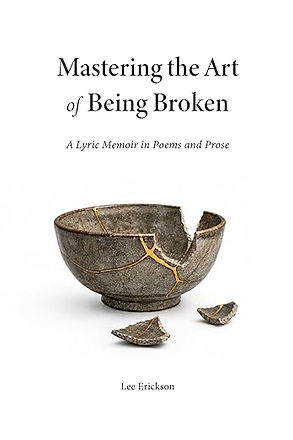
Mastering the Art of Being Broken: A Lyric Memoir in Poems and Prose

Lee Erickson
family estrangement, grief, suicide, addiction, queerness
ECSI Publishing


Share this review:
A gay man haunted by his brother’s suicide and his family’s emotional failures must confront inherited estrangement, addiction, and grief to find a way to belong and keep living.
In Mastering the Art of Being Broken, Lee Erickson provides an intimate, fluid reckoning with the devastating aftermath of familial rejection, addiction, and a sibling's suicide. Written as a lyric memoir, the book blends poetry and prose to mirror the fragmented reality of grief. For a narrator processing the 2002 suicide of his brother, Doug, this hybrid form is highly effective. Trauma arrives in sharp bursts of memory, unresolved echoes, and shifting emotional weather. Erickson’s structure honors that psychological truth.
At the emotional core of the memoir is the unspoken bond between two brothers who found themselves on the periphery of their own family. In 1998, the narrator’s coming out as a gay man results in an eighteen-month freeze of silence and resentment from his family. Amidst this isolation, Doug, who is battling addiction, reaches out with unconditional acceptance, writing a letter to assure his brother that he is loved.
This shared "outsider status" becomes the lens through which the narrator views their history. Erickson portrays a midwestern household defined by emotional limitation, silence, and hardness, where both boys were shaped by shame, disillusionment with their father, and a persistent sense of difference. A pivotal, haunting memory of a temporary "return to normalcy" during a Memorial Day visit serves as a tragic microcosm of the family dynamic: a fragile peace built on unacknowledged pain.
The narrative accelerates when Doug dies by suicide in Minnesota. Receiving the news in Seattle, the narrator is thrust back into the family fold. Erickson’s depiction of the immediate aftermath is raw and unsparing. He captures the cold institutional roadblocks, such as the Catholic church refusing to bury Doug, alongside the claustrophobic grief delayed by a late Spring blizzard.
It is during this forced confinement that the memoir reaches its thematic turning point: the active resistance against family silence. While the father attempts to reduce Doug’s death strictly to "the drugs," the narrator fiercely insists that the word suicide be spoken. The act of writing a poem for Doug and reading it publicly at the funeral becomes a radical disruption of generational patterns. The poem validates Doug's life, rejecting the label of cowardice and explicitly naming the decades-long battle Doug fought against his demons.
What elevates Mastering the Art of Being Broken above standard grief memoirs is its refusal to offer an easy resolution. The narrator does not "solve" his brother's death, nor does he magically cure his own inherited wounds. Instead, the book’s triumph lies in the narrator's transition from paralyzing self-blame to a state of open, vocal remembrance.
Mastering the Art of Being Broken is a devastating yet ultimately luminous addition to the literature of bereavement. Erickson handles the intersecting vulnerabilities of queerness, addiction, and survivor's guilt with immense tenderness and sharp-edged honesty. It is an essential read for anyone seeking to understand the enduring, lifelong work of choosing to live after a profound loss.
